Tag: Huawei

  • Huawei wants to add Google apps to its own app store to sidestep the trade ban

    Huawei wants to add Google apps to its own app store to sidestep the trade ban

    Huawei is looking forward to adding Google applications to its own app store. China has decided to take this step due to the trade ban. The company is trying to link the Google maps, translator and drive in the app gallery.

    Huawei wants to add Google apps to its own app store

    Know about the impact of the US trade ban

    Now, Huawei’s companies can no longer ship their handsets with Google Mobile Services. This has happened due to the major trade ban by the US. This means that if you are using a Huawei device, you will not have access to the Play Store.

    AppGallery, Huawei app store has replaced the Google Play store on Huawei and Honor Android devices. This app store consists of many applications such as Huawei Assistant, browser, mobile cloud, etc.

    An attempt to make it happen

    China is endeavouring to make the availability of Google services through its AppGallery. It seeks to achieve the same outcome as Apple. However, they are not sure of the sanction. Due to the trade ban, obtaining a sanction has become troublesome.

    If Huawei manages to include the Google applications to the own app store, then some of the products in-demand will experience a huge boost.

    With this trade ban by the US, China is now facing some major difficulties in trading. It is finding out measures to trade conveniently and profitably. China is endeavouring to bring in new ways of trading with positive impacts.

  • Huawei Unveils Crush Green Nova 5t

    Huawei Unveils Crush Green Nova 5t

    Huawei revealed its new device named Nova 5T in August 2019, and the phone appeared in the market in September. It has got some marketplace since then, so what’s more exciting than launching a new color shade in the same series. Fascinating right?

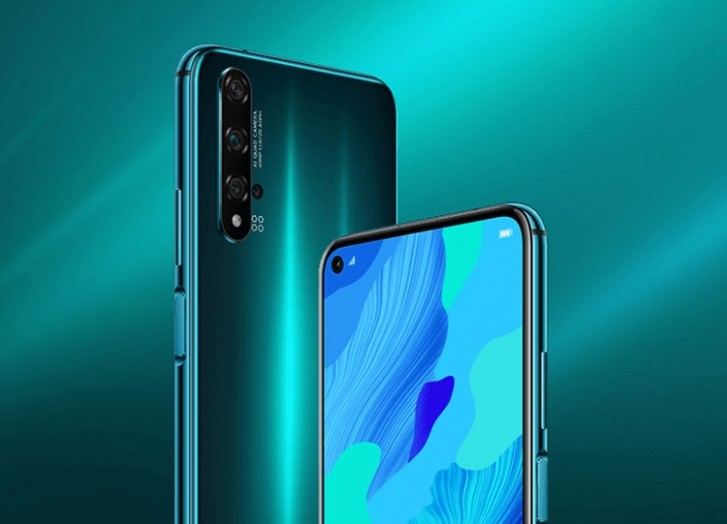
    Nova 5t Crush Green

    This is a technique almost every Smartphone maker adapts in order to keep their demand in the market still. Therefore, Huawei revealed a brand-new color for Nova 5T. The all-new crush green Nova 5T is the most amazing and eye-catching shades of the series. The phone also comes in different colors like midsummer purple, black, and crush blue.

    As far as the specifications and features are concerned, there are no distinctions in all the phones except for the color variation. The specifications stand the same in all the above shades. The touch screen is exactly the same 6.26’’ 1080 x 2340IPS with a left-aligned punch hole for a 32 MP selfie camera.

    It has 6/8 GB RAM, 128GB non-expandable storage. The phone comes with a quad-camera arrangement: 48 MP primary cameras, 16MP ultra-wide, 2MP macro cam, and a 2 MP deepness sensing unit. The device has a 3,750 mAh battery and currently runs on EMUI 10 with Android 10.

    Know Something More About The Huawei Nova 5t

    The Nova 5T is Huawei’s second phone in the Nova series to come out in 2019. It came out at a time when most of the top brands, including Huawei, were just launching their top graded phones with some impressive specifications. Huawei is aiming towards offering devices within a budget to keep the market value still.

    The Nova 5T looks like a great deal. It comes with a quad-cam arrangement and a Kirin 980 processor within the best price range. Though it is a great deal, Nova 5T is still not into the list of the premium mobile phones.

    This is because you won’t see specifications like wireless charging, expandable storage, OLED screen, or water resistivity. But, if you are okay with the basics and are not looking for the extras, you can go for it. If you crave an excellent camera quality, this phone is just a perfect pick for you.

    Design

    The Nova series has successfully refreshed the brand. They have come up with Midsummer Purple with a shimmery finishing, which makes it look just perfect. The all-new crush green color variant is the latest talk of the town. You will find a newly minted Nova monogram in an eye-catching reflective finishing on its 2.5D glass-clad backside.

    The glass finish catches fingerprints quickly with the slightest touch, but the reflective light camouflages it all. Turn the phone, and you will find a large 6.26-inch display. The beautiful design of the phone gives a good in-hand feel.

    The Nova 5T comes with a 4.5mm punch hole at the top left corner, which gives the phone a screen to body ratio of 90%. There is a mounted fingerprint scanner on the right side of the device. It also works as a power button and unlocks the phone within a fraction of seconds.

    The phone is worth its price as far as the specifications are concerned. If you are fond of photography, this one is undoubtedly your type.

  • Huawei Google Ban: What Does It Mean For Your Android Phone

    Huawei Google Ban: What Does It Mean For Your Android Phone

    Once again, the US has struck the Chinese manufacturer, Huawei, by banned its license to work with the other US companies. Now, if you are thinking about how it would affect your Huawei device due to Huawei Google Ban.

    Huawei Google Ban


    You will still be able to use and buy Huawei phones or laptops, but it will be a little different for the products that have been launched after the trade ban on Huawei by the United States. This fallout between the US and China can severely affect the market for Android.

    As we all know, Google is an American company, and the US government has blacklisted Huawei from trading in the US. Huawei uses Google developed Android platform for its smartphones.

    It has shipped about 200 million smartphones leading to Google revoking its Android license to act in accordance with the government. 

    Due to Huawei Google ban, Huawei will no longer have any access to Android apart from ASOP. It is the Android Open Source Project and does not require any license.

    The existing Huawei or sister company Honor devices will remain unaffected for some time now, as confirmed by both Google and Huawei. But, it could lead to a time where Google will block all its services on both Huawei and Honor phones.

    The situation is severe, and it is difficult to determine the restrictions that will be imposed on the two Chinese sister companies. Both the companies have assured that they will provide after-sales services and security updates to the existing users.

    So, if you are asking if we recommend you to boy Huawei or Honor phones in the near future, the answer is no. 

    While Huawei has continuously been assuring its existing users about the usage and issue management, it is yet to be clear about the future endeavors that it is planning. It has pulled various new handsets from announcements, which further implies the seriousness of the situation.

    What Huawei Says

    However, as Huawei has released a statement saying, “Huawei has made substantial contributions to the development and growth of Android around the world. As one of Android’s key global partners, we have worked closely with their open-source platform to develop an ecosystem that has benefitted both users and the industry“.

    With this statement, an idea doing rounds in the market is that Huawei is launching an operating system and software of their own. Huawei has indicated this possibility and their availability of resources for doing such a thing.

    It has often showcased design and technical prowess to carry out this thought. Maybe in some time, there will be new Huawei and Honor handsets working on a completing new OS with no Android whatsoever.

    Summarizing it

    We find it unlikely in recent times and presume it will take at least two to three years to implement this kind of change. But, for now, we do not recommend buying Huawei or Honor phones unless you are living in China.

  • Huawei reveals Android Alternative HarmonyOS, Claiming it is 60 Percent Faster

    Huawei reveals Android Alternative HarmonyOS, Claiming it is 60 Percent Faster

    After the huge crackdown of Huawei with the US, it has begun to imagine a tech world without Android. There was no news from Huawei on it, until early July 2019 when the CEO of Huawei came forward to reveal an alternative to Android.

    HarmonyOS

    At the annual developer conference of Huawei, it has finally shared some details about the new homegrown alternative to Android. Named as ‘HongmengOS’ or ‘HarmonyOS’, it has been described as a future-oriented software platform which has taken about two years to be developed by Huawei.

    The company promises a 60 percent higher speed than Android. Along with various other new features, it could be connected across multiple smart devices like cars, televisions, IoT gadgets, and phones.

    In a nutshell, this new platform is having some new features that make a clear winner from the Android. They have also compared it to ‘Fuschia’, which is an upcoming operating system by Google. They have insisted on HarmonyOS being more efficient than Android due to redundant coding and mechanisms that Android uses.

    The HarmonyOS has a microkernel design that can support several coding languages like Kotlin, Java, and C++. It has a deterministic scheduling engine that allows the operating system to handle and manage resources quicker and better.

    This, in turn, results in lower latencies and IPC i.e. Instructions per Cycle up to five times more efficient than the existing systems.

    Huawei claims that the HarmonyOS uses a multi-device IDE (integrated development environment), unlike Android. This multi-device IDE enables the company to develop a sole version of the operating system which can be used across a scope of devices.

    However, for Android, the operating system will need some tweakings to match every device. This is one of the many reasons for the delays in software updates and fragmentation.

    Huawei has confirmed that this operating system has been in the making since 2017 and will be initially targeting the smaller display products like the Huawei Vision.

    The Huawei CEO, Richard Yu has come forward to admit that there will be a time when Huawei will no longer be supporting the Android ecosystem. But, it has still not commented on smartphones in this revelation.

    While the HarmonyOS is famous as an open-source platform, Huawei does not intend to allow its users to have root access to the operating system saying it would be highly risky in terms of security to do such a thing.

    Also, as the new operating system, HarmonyOS is not compatible with Android apps, the developers will require to adjust the applications in order to run the new OS. Huawei CEO has further confirmed that it will be extremely easy to convert from Android to HarmonyOS.

    Bottom Line

    All said and done, we are a little jumbled on how this new HarmonyOS will be received by the users and developers. While also, Huawei has been very cautious about its future given the continuous pressure by the US government. It might have to do more than just building a new ecosystem.

  • Huawei’s Waiver to Get 6-month Extension

    Huawei’s Waiver to Get 6-month Extension

    Huawei, a Chinese telecommunications giant company, has been put under a squeeze by the US government ever since the end of 2018.

    The trade war between the US and China has been escalating with concerns that Huawei may be compromising the national security of the Trump government while also being tagged for potential spying.

    Huawei’s Waiver to Get 6-month Extension

    The President of the United States, Donald Trump, had banned the use of any information and communication technology from anyone that is being considered a national threat, majorly aimed at Huawei in May.

    Huawei, along with 70 other affiliates, was listed in a trade blacklist that barred anyone on the list to buy parts or components from the US companies without approval from the government.

    It has highlighted that Huawei has been a significant concern for the military as well as other intelligence agencies. The Huawei products are restricted regardless of where they were made.

    The US government has stressed Huawei to use its control over the telecommunication infrastructures to intercept data from government and individuals, which could land an upper hand to China in case of a cyber-war.


    Tensions between the two countries kept creeping in while the US worried about how Huawei could potentially compromise the security of the country to China. While the people think the ban has more to do with the economic concerns than the dread of espionage.

     Huawei has brought in more than $100 billion in revenue in the year 2018 despite the political flurry.

    The idea that has been doing the rounds is also that as the sales of Huawei kept rising while the market share of Apple falls, Trump has made his efforts to restore the manufacturing jobs to the United States.

    Recently, the Commerce Department has granted another six-month extension to Huawei’s Waiver over and above the previous three-month waiver.

    The main reason, as cited by the officials for this act, is not to affect the operations of several rural communication providers working with Huawei.

    The extension allows Huawei to purchase any US origin hardware or software that is needed to continue supplying the rural internet providers. It is unknown if Huawei’s waiver may be further extended.

    The ban on Huawei has mined out several industries. However, many US chipmakers have informed that the semiconductors used in most of the Huawei phones are readily available in the world market and do not have any relevance in the field of national security risks.

    The semiconductor industry has also argued that the export ban is severely affecting US-based companies as well, thus providing an advantage to the other foreign competitor giants like Samsung and MediaTek from South Korea and Taiwan.

    Cutting off Huawei as a whole would undoubtedly affect the industry but by how much is still to be determined.

    The future course of action that the US government takes on this ban and related economic activities is open to speculation as we wait for a more concrete update from the authorities.

  • Trump Government Gives a 6 Month Extension to Huawei Phones

    Trump Government Gives a 6 Month Extension to Huawei Phones

    Over the second week of November 2019, the Trump organization’s boycotting of Huawei has gained some traction and direction. This report breaks down for you, how the story has unfurled.

    6 Month Extension to Huawei Phones

    The United States and China are in a gigantic exchange and trade war.

    Their governments are trying to settle some critical disputes. Imposed restrictions on Huawei have been the most noteworthy one. The ban became effective in May 2019, and a 3-month extension was granted to Huawei by the Trump government. It expired on November 15, 2019.


    Trump Government Bashes Huawei And Then Provides Relief

    National security concerns have been an ongoing theme in the more significant part of Huawei’s history.

    Fast forward to 2018: Verizon, a prominent mobile carrier in the US, stopped using Huawei phones. Huawei, by the time, started rolling out Android phones throughout the world, including the US.

    The final quarter of 2018 and 2019 saw major allegations against Huawei, which would later result in the Trump government ban. Now, there is some relief news with them granting a 6-month extension to the company’s trade licenses with US firms.

    This extension is preceded by another 3-month period that expired on November 15, 2019.

    Controversial Beginnings of Huawei

    Ren Zhengfei established Huawei in 1987. He began Huawei after his military profession abruptly ended due to downsizing. Huawei’s initial breakthrough was rife with controversy.

    The global technology community alleged Huawei of stealing intellectual property and reverse engineering it to release in the People’s Republic of China.

    Huawei’s Journey so far Has Been Rife with Allegations

    Before China joined the WTO in 2001, Huawei came under the watch list by the Indian government for allegedly providing terrorist organizations with IT equipment.

    Things cooled down when Huawei denied the allegations, and there was no concrete proof to substantiate the claims.

    However, in 2003, a US telecommunication giant, CISCO, came up with a claim accusing Huawei of stealing their codes for internet routers.

    Huawei, after many tribulations, agreed to the claim and later, reached the settlement deal with CISCO.

    In 2008, the US government blocked Huawei’s purchase deal of a US technology company, 3COM, citing security reasons. Furthermore, till 2018, Huawei came under the radar by another two companies.

    Vodafone accused Huawei of placing backdoors in their devices that violate possible data privacy. BT Mobile accused Huawei of the same citing security breach in their devices.

    In 2010, another US technology giant, Motorola, accused and later sued Huawei for illegal company surveillance. This lawsuit was finally settled a year later. Huawei kept on following a tumultuous journey.

    Huawei constructed a humungous research center in the United States in the same year, wanting to venture into the nation and create a prominent mobile carrier network in the US.

    However, the Obama government obstructed Huawei’s offer to assemble a national remote system for crisis benefits, citing security interests of the nation.

    With the current table stacked against the Chinese giant, the 6-month waiver comes as a relief. Huawei partners that have maintained trust since the ban have also shown signs of positivity as resumed trade will give a bullish outlook to Huawei’s falling stock!

  • Huawei & ZTE Could Lose What Little Business they Have In United States

    Huawei & ZTE Could Lose What Little Business they Have In United States

    Chinese smartphone manufacturers Huawei and ZTE find themselves in trouble with the US Federal Communications Commission (FCC) placing more restrictions by barring companies receiving government funds from purchasing or receiving services from Huawei and ZTE.

    Huawei & ZTE

    In a move that could tremendously curb Huawei’s global expansion trajectory, the FCC announced the proposal in Washington and will have the agency vote on the same.

    Huawei is the largest telecommunications equipment manufacturer globally, a leading smartphone brand globally and a pioneer in 5G technology equipment. Although ZTE which recently released the MiFavor 10 OS holds a relatively smaller market share compared to Huawei, it is also one of the major Chinese telecom manufacturers.

    Arguing that Huawei and ZTE pose a threat to the security and communications networks in the US, Ajit Pai, the Chairman of FCC said that these telecom manufacturers have to follow Chinese laws that require them to comply with requests from government agencies and intelligence services. This law implies that Chinese authorities could compel Huawei & ZTE to spy on American businesses and individuals.

    In the event that a 5G network with a Huawei equipment was in operation close to a US military base or any area of sensitive Federal information, Pai elucidated, “Beijing could demand the installation of a ‘back door’ to allow secret access to the network, insert malware or viruses and receive all kinds of information – without Americans ever knowing.”

    He stated that the usage of Huawei & ZTE equipment is widely used across various rural networks in the US and the authorities would consider a proposal on how to “rip and replace” such equipment.


    The Chinese tech giant Huawei has refuted claims from the FCC of their equipment or their organization posing a threat to their national security. A spokesperson from Huawei stated, “Banning specific vendors based on country origin will do nothing to protect America’s telecommunications network.” While ZTE did not comment on the issue, they too have in the past refuted claims on their services and products posing a threat to US security agencies.

  • Huawei Sales in India Strong Despite Uncertain Future

    Huawei Sales in India Strong Despite Uncertain Future

    Shortly along with the heels of United States President Donald Trump blocking the Chinese smartphone manufacturer, Huawei from doing business with any American firm, sales in the European markets too have faced a steep fall. With many carriers and retailers in Europe re-evaluating their association with the smartphone maker, the future of Huawei may well be uncertain.

    Huawei Sales in India Strong Despite Uncertain Future

    Rolled out about six months back, this trade ban from Washington bars Huawei from buying key U.S. components and software without licenses. Word is, the world’s largest smartphone maker after Samsung, Huawei is looking at relying on its massive home market and in-house software to drive its sales until a resolution of this ban is insight.

    Despite the tech giant from China putting up a brave front and launching new smartphones all over the world, one cannot deny that Huawei is feeling the pinch from this big ban.

    According to reports, notwithstanding the rollout of the trade ban by Washington, the sales of Huawei smartphones in India are undeterred, although there is no certainty whether it will continue to remain so in the near future.

    Croma, one of the largest gadget retailers in India has stated that Huawei users are not particularly concerned about upcoming updates and have displayed confidence that new software and security updates would certainly be coming their way.

    Ritesh Ghosal, the Chief Marketing Officer at Croma, said that “with its innovative and differentiated technology offerings, Huawei will continue to be one of the sought-after brands” in the Indian smartphone market.

    In the same press release, Croma also announced that owners of the Huawei smartphone P30 Pro will receive a dual view video and AR measure very soon, along with the usual security updates.

    Croma has partnered with Huawei through the years for the sale of its smartphone in India, helping the Chinese smartphone manufacturer establish a strong foothold in the Indian smartphone ecosystem.

    However, Croma chose to skip any announcements on the future plans of Huawei or the launch of any upcoming devices by Huawei in India. They also did not comment on the Honor 20 Pro that was recently announced in London earlier this month without any clarity on the launch date.

    Despite its precarious situation, Huawei has managed to put up rather enviable growth figures in the third quarter. With roughly half of its revenue coming from smartphone sales, Huawei expanded its smartphone shipments by a whopping 29% in quarter three of 2019.

    Huawei is also all set to roll out its range of latest smartwatches under the Huawei Watch G2 label in India on the 5th of December, 2019.

    It would be interesting to see how this ban from the United States President Donald Trump on the Chinese tech giant will influence its sales and market share in the mighty Indian smartphone market. This ban may also impact its sub-brand Honor, which has a big market share in India and globally for its range of budget smartphones.

  • How Huawei Lost the Support of The Chinese Public

    How Huawei Lost the Support of The Chinese Public

    Meng Wanzhou, the deputy chairwoman of the board and chief financial officer of Huawei, was arrested in December 2018 while transferring planes in Vancouver as she was en route to Mexico from Hong Kong.

    How Huawei Lost the Support of The Chinese Public

    Meng was charged with “conspiracy to defraud multiple international institutions.” She has since been under house arrest in her multi-million dollar home in Vancouver.

    On December 1, 2019, the first anniversary of her arrest in Canada, Meng issued an open letter describing how the arrest affected her lifestyle and how she experienced pain, fear, disappointment, and helplessness in the one year she was detained in Canada.

    Her letter was not received well by the Chinese public. In the letter, she wrote at length about how she has accepted her current circumstances and that she no longer fears the unknown.

    Numerous users posted the numbers 996, 985, 251, and 404 in the comments below her letter on Weibo, a social media platform that resembles Twitter about how Huawei lost the support.

    The numbers refer to a former Huawei employee, who graduated from one of China’s 985 top universities. The employee worked 12 hours a day, six days a week, and was jailed for over seven months after he demanded his severance pay when his contract hadn’t been renewed.

    His story went viral on the Chinese internet and generated angry responses online, which were later censored by the Chinese government.

    The man, Li Hongyuan was later released from prison with no charges and was compensated by the government for wrongful imprisonment. Li shared his story online around the same time Meng issued her letter, and this was when things started to heat up.

    A comment by Jiang Feng, a Chinese psychologist, perfectly captures the sentiments of the Chinese public.

    He writes, “One enjoyed a sunny Canadian mansion while the other enjoyed the cold and damp detention cell in Shenzhen.”

    The comment was made on Zhihu, which is a question-and-answer site similar to Quora.

    The Chinese public considers Huawei to be the crown jewel of the country’s tech industry. Many Chinese proudly splurge on Huawei phones and stray away from devices by other brands.

    The backlash due to the imprisonment of a longtime employee has made it clear that the Chinese are beginning to dislike Huawei.

    Users on Chinese social media sites are talking about boycotting Huawei products altogether. Images of a pair of handcuffs with Huawei’s branding have been circulating online, with the captions publicizing them as a new smart-fitness wristband.

    The depth of the sentiments of the Chinese people can be understood when we look at the company’s circumstances and their reaction from just a few months ago.

    Following Meng’s arrest, messages supporting Meng and Huawei flooded Chinese social media sites.

    As reported by research firm Canalys, Huawei’s smartphone sales went up by 66 percent from the previous year, and sales of competing brands like Apple and Samsung declined.

    Now, many Chinese middle-class professionals worry that what happened to Li Hongyuan could also happen to them. Articles about life in jail in the Longgang detention center are circulating on social media sites.

    The magnitude of censorship by the Chinese government has only added to the outrage.

    Winning back the hearts of the Chinese public will be a difficult challenge for Huawei.

  • Huawei’s Q3 Results Show Growing Sales Despite US Ban

    Huawei’s Q3 Results Show Growing Sales Despite US Ban

    Huawei’s Q3 results report is now available. Its figures suggest that the company has not faced any issue following the ban by the US government. Combined revenues for the Q1-Q3 period came to about $86 billion which has in fact grown by 24.4 % from the same time last year. With regards to smartphones, Huawei has shipped over 185 million units in the first three quarters of 2019 which again sees an increase of 26% over the last year.

    While the company has not released specific shipment details for the third quarter of 2019, it is expected from other statistics that it should fall somewhere around 67 million units. When compared to the sales of 59 million units from the second quarter, we see a 13.5% rise here as well. Huawei has certainly managed to make a great profit in the third quarter of 2019 despite the US market not being open for them.

    Huawei’s Q3 Results
    Huawei’s Q3 Results

    The report also contains details about 5G network expansion that Huawei is working on. It has partnered with over 60 commercial contracts with carriers across the globe. Over 220 Fortune 500 companies and 700 cities around the world have partnered with Huawei for its Horizon Digital Platform.

    Trouble Between Huawei And The US

    The latest phones by Huawei have a slightly different OS now. You will not find any pre-loaded default Google apps. There would be no Google Maps, Gmail, or even the Google Play Store. Instead, you can use the Huawei Mobile Services where you can look around the Huawei’s AppGallery app store, their web browser, and the photo gallery. With Huawei being blacklisted by the US over spy charges, Google can no longer offer its services to Huawei which has resulted in this. Since basic Google services are used by most users regardless of the device they use, many thought that this would hurt Huawei quite a lot financially. However, the company have only seen an increase in sales and shipments.

    Huawei Mate 30 smartphone
    Huawei Mate 30 smartphone

    Huawei’s Q3 Report and Sales

    After the release of Huawei’s Q3 earnings report, we see that the company has only grown in terms of sales. This is an achievement keeping in mind the ongoing trade war between the US and China. Huawei’s latest Mate 30 smartphone has been wildly popular and this has shown in the Q3 sales report. Since the current results only calculate the figures till September, later this year, we will know the true figures. The ways things are going now, Huawei could have explosive results.

    A few months back, Huawei released a statement which said, “While the impact of the US trade restrictions will be less than initially feared, the curbs could push its smartphone unit’s revenue lower by about $10 billion this year.” This is the first time Huawei has been placed on the US Entity List and has been such growing results. Net profit margins of the company in H1 is at 8.7%. The rapid sales in Q3 came as a surprise. Especially keeping in mind that the company didn’t do that well in Q1 and Q2 of 2019.