Realme is getting ready for launching two budget phones – the Realme C3 and the Realme 5i. The news about the release of these phones was found on Singapore’s IMDA (Infocomm Media Development Authority) website. While there are no details known about these phones, we do know the model numbers of these devices. This became known after Sudhanshu Ambhore, a reliable tipster, tweeted about the details about these phones on the IMDA website.
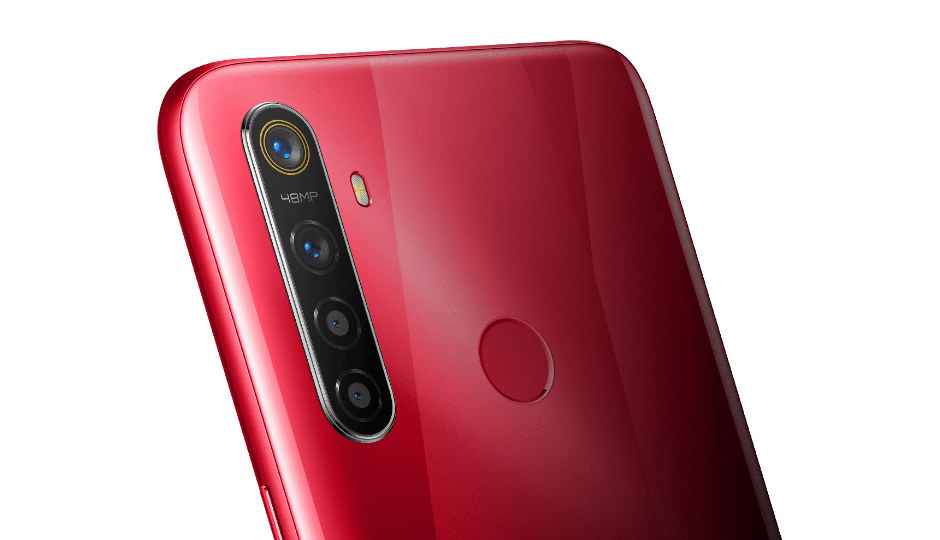
Realme C3
Realme C3
The Realme C3 smartphone has the model number RMX1941. The phone offers support for LTE. This also indicates that the device will not be a 5G smartphone. It is expected to release early next year and has already gathered much interest among the fans. Both the smartphones were listed by Sinoppel Device Pte. Ltd. which is the local office of Oppo Mobiles. IT is also believed that the Realme C3 phone could possibly replace the Realme C2 as the entry-level Realme smartphone. However, we do not know a lot about the specs of the device yet.
Realme 5i
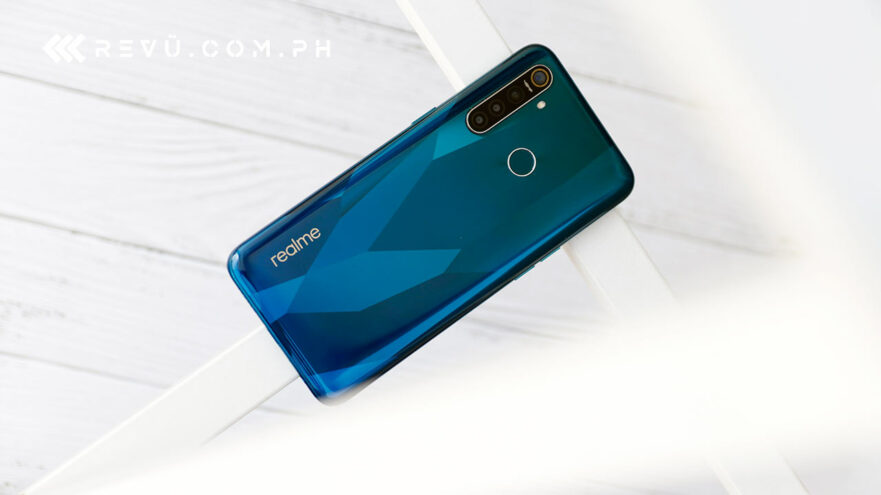
The Realme 5i, on the other hand, has the model number RMX2030. This is the same number that was seen on the Wi-Fi Alliance certification website. Many believe that this increases the authenticity of the details. Besides the model number and the fact that it will support LTE, we don’t know a lot about its features and specs. Since Realme already has a good range of devices on the 5 series, including Realme 5 and the Realme 5s, we believe that the Realme 5i could offer significantly better features. Looking at the Realme 3i, this looks possible. Realme could increase the price of the 5i slightly or maybe even replace the original Realme 5 with the Realme 5i. This ensures that the 5 series stays mostly up to date.
Realme C3, Realme 5
Other Details
Towards the end of 2019, details have emerged about the Realme’s upcoming smartphones. Named Realme C3 and the Realme 5i, these budget smartphones are among the latest leaks. While not a lot is known about these devices, it is quite certain that these smartphones will be released sometime in 2020. With India being a major market for Realme, these phones are likely to be released here first. A global or geography-specific release may soon follow. More details about the phone, its specs, release dates, and price should be available in early 2020.
While both Realme C3 and the Realme 5i are touted as budget smartphones, we don’t know other specs about them. We do, however, know that the Realme C3 will be a non-5G smartphone and is likely to be released before the 5i model. The C3 will likely replace Realme C2 and feature higher specs than its predecessor which is only natural to expect. The price of these devices is not likely to be a lot higher than the Realme 5 and 5s models. The price increase will be justified by better specs hopefully.
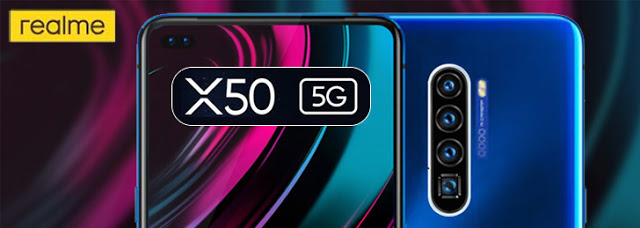
WRealme’s first 5G phone is on its way. The Realme X50 is expected to launch in China at a specific event. The promotion for this event has been going on pretty strongly in the last few weeks. The phone could have simultaneous dual-channel Wi-Fi and 5G connectivity. This will ensure better uplink and downlink speeds. Realme has also revealed that the X50 model will be powered by the Snapdragon 765G SoC. It will also support mainstream 5G network bands. This will make sure that the users do not face any connectivity problems.
Realme mentioned that the X50 smartphone will work on dual-channel Wi-Fi and 5G networks at the same time. This was mentioned in an official Weibo post. Although the company did not talk about the technical aspect of this, it did mention that users would be able to enjoy higher speeds overall. You might have noticed that the Dual Channel Network Acceleration feature in ColorOS 7 works in a similar manner, allowing users to have a smoother and faster experience.
Realme X50 Camera
Realme X50
The company has made another announcement on their official Weibo channel where they talked about offering dual-mode 5G support. Besides this, it will also support mainstream 5G network bands including n1, n41, n78, and n79. Quite recently, Realme talked about its upcoming phone, the X50 model. The phone will have a pill-shaped hole-punch that will have two front cameras. The X50 smartphone will have a 6.6-inch display with a 90Hz refresh rate.
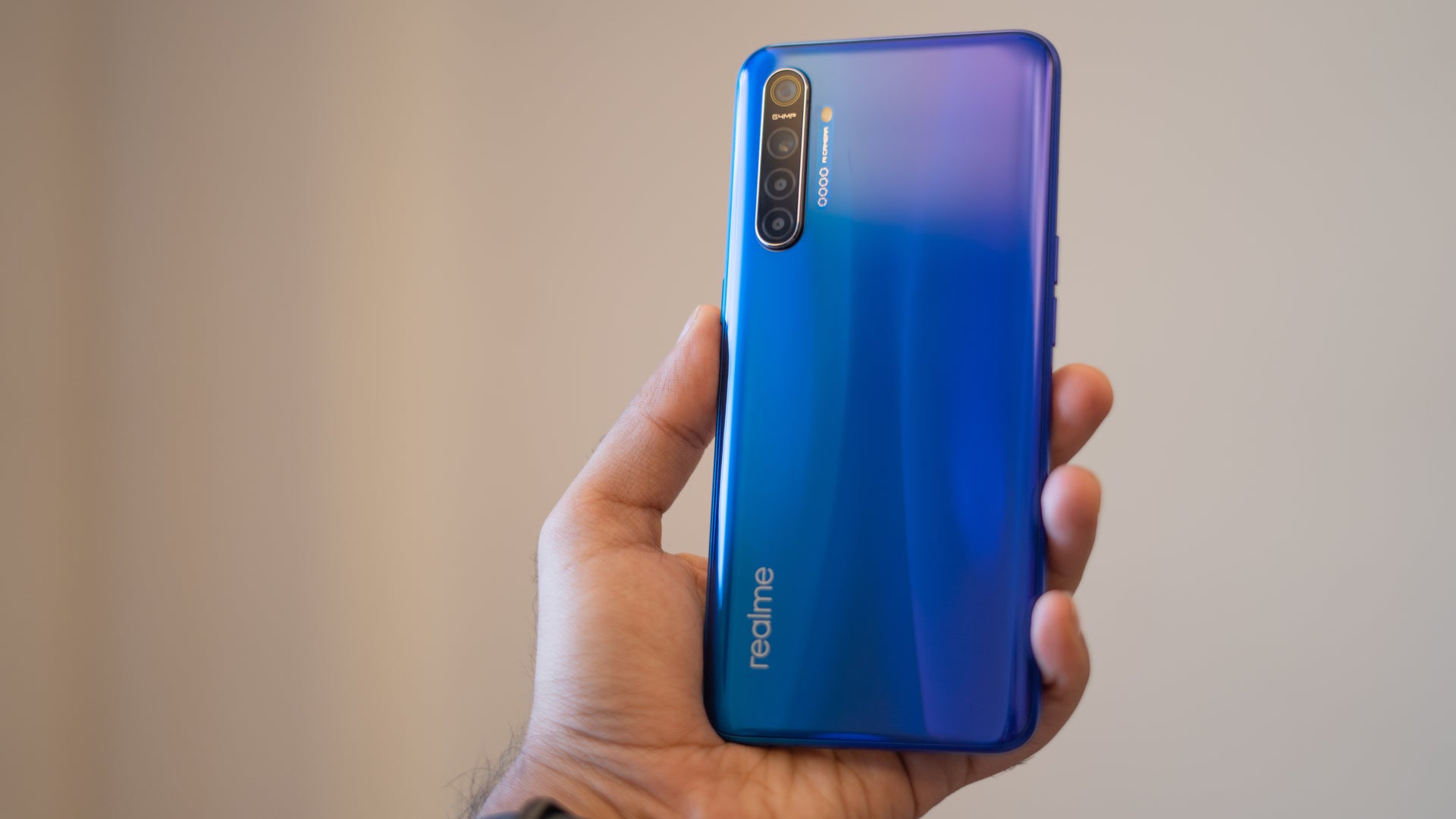
Coming to the camera, the phone will have a 64-megapixel camera with Sony IMX686 sensor. Other specs that might be seen here include the fact that the phone will have 8GB of RAM. The phone will run on octa-core Qualcomm Snapdragon 765G SoC that comes with Qualcomm X52 5G modem. The smartphone will also have a 32-megapixel main selfie camera and an 8-megapixel wide-angle lens.
Realme X50
What else is new?
The Realme X50 will come with an improved cooling system. This five-dimensional, ice-cooled heat dissipation system will replace the usual heat-sinking tube. The announcement was via Weibo again. This new cooling system will ensure complete coverage of core heating sources. The news regarding this came soon after Realme released promo about the X50 smartphone and its simultaneous dual-channel Wi-Fi and 5G connectivity feature. Of course, the fact that the phone will come with a 64-megapixel primary sensor is a huge attraction for most users as well.
According to the official Weibo post by Realme, the X50 smartphone will have an 8mm ultra-large diameter liquid-cooled cooper tube having 410 cubic metres of volume. This tube is an important part of their 5D ice-cooled heat dissipation system. The reason behind the usage of this new cooling system is the fact that the phone’s processing unit comes with an integrated 5G modem. The phone will launch sometime next year. We will know more details about its price and so on nearer the release date.
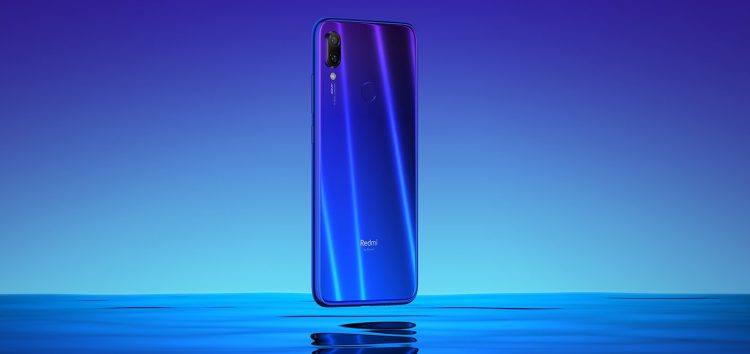
Recently, both Xiaomi Redmi Note 7 and Redmi Note 7 Pro received an MIUI update. While this upgrade was for Android 9 Pie, the company recently announced that they are planning to roll out another update. This one would bring Android 10-based MIUI 11 update to these smartphones. Although Xiaomi is yet to officially comment about this update, forum moderators have mentioned that the two devices will soon receive these updates. Besides the Redmi Note 7 and Note 7 Pro, Note 7S is expected to receive the update at the same time.
“In the official Chinese community of Mi, official information appeared in the closed section that the development of MIUI 11 based on Android 10 for RN7 and RN 7 Pro began!”, the moderator wrote in the forum. The message indicates that the first beta version will be rolled out within the next two to three weeks in India. However, users will have to wait for a couple of months for a more stable update.
Redmi Note 7 and Note 7 Pro Features
Note 7 Pro has a 6.3-inch FHD+ Dot Notch LTPS in-cell display. It runs on the latest Snapdragon 675 SoC by Qualcomm. Coming to the camera, the phone features a dual rear camera system with a 48 MP Sony IMX586 sensor and 5 MP secondary sensor. The smartphone does come with a 3.5 mm headphone jack. Besides this, it features an IR blaster, type-C port, and Corning Gorilla Glass 5 on both the front and at the back. If you look at the Redmi series, you will notice that this is one of the very first smartphones to have a USB-C port.
The phone has a huge 4,000 mAh battery which offers about 20% more standby time compared to its predecessors. Of course, it supports Qualcomm’s Quick Charge 4 as well. While this was all about Redmi Note 7 Pro, let’s take a quick look at the Redmi Note 7 model. You might have noticed that this model is not available in the market. This is because the phone has been replaced by the Redmi Note 7s Model.
MIUI 11 Update
The latter comes with a 6.3-inch full-HD+ display. It has an aspect ratio of 19.5:9. Powered by Qualcomm Snapdragon 660 chipset and running on MIUI 11 based on Android 9 Pie, the phone quickly became popular. It also has a 4,000mAh battery and comes with support for Quick Charge 4.0. With regards to the camera, you can expect a 12-megapixel primary camera with an f/2.2 aperture and a 2-megapixel secondary depth sensor. The front has a 13-megapixel sensor.
MIUI 11 Update
Redmi Note 7 Pro and Note 7 are two highly popular models that were released earlier in the year. India is a huge market for Xiaomi and the company is ensuring that it stays that way. These two smartphones will receive their Android 10-based MIUI update soon. Note 7 is available in two variants. One has a 3GB RAM and 32GB storage while the other comes with 6GB RAM and 64GB storage. Available colours include Ruby Red, Onyx Black, and Sapphire Blue.
WhatsApp is one of the most widely used messaging apps globally. Developed and maintained by Facebook, WhatsApp routinely keeps rolling out new features for its users.
The newest feature implemented by WhatsApp is the ability to lock the app using a fingerprint.
iPhone users have been able to use Touch ID and Face ID to secure their WhatsApp chats for a while now.
Since the begging of the features’ testing phases in August, Android users have eagerly anticipated the rollout of the Fingerprint Lock feature.
WhatsApp has finally officially extended this functionality to Android-based devices.
Earlier, Android smartphone users had to rely on third-party apps to secure their data. Some manufacturers like Xiaomi and OnePlus introduced built-in applications that allow securing any app with a fingerprint.
The rollout of an official fingerprint security feature from WhatsApp enables all users to secure their chats regardless of which smartphone they use.
Here is a quick, seven-step guide to enabling fingerprint lock on WhatsApp
First, make sure you are using the latest version of WhatsApp.
Next, open WhatsApp on your Android phone.
Tap on the options (three dots) button on the top right corner of the screen.
Tap on the ‘Settings’ option.
Navigate to ‘Account’ from the menu.
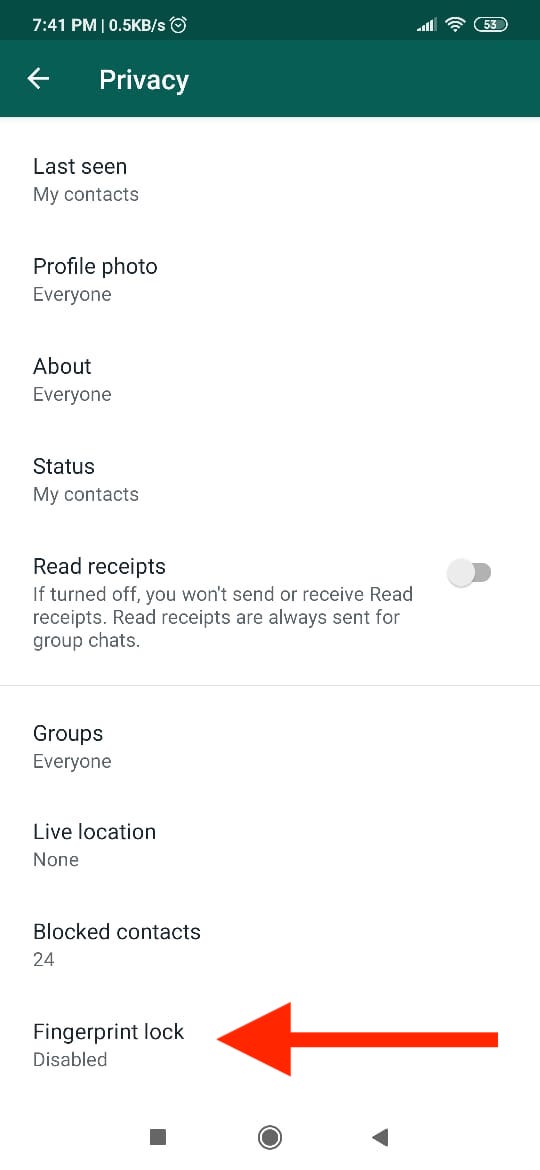
Tap on ‘Privacy’ and then tap on the ‘Fingerprint Lock’ option.
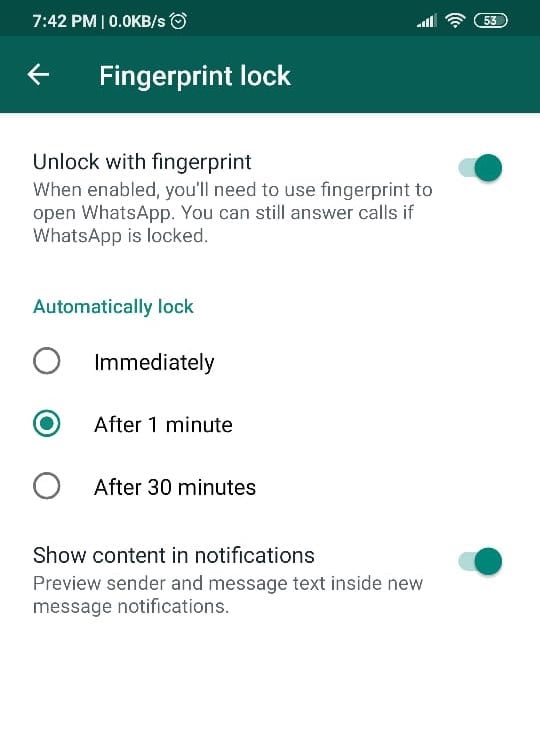
Toggle the ‘Unlock with fingerprint’ option.
You have now enabled fingerprint lock on WhatsApp. Also, you can now set how long you want WhatsApp to stay unlocked once launched.
You may choose between the ‘Immediately,’ ‘After 1 minute,’ and ‘After 30 minutes’ options.
The WhatsApp fingerprint lock feature also gives you control over your notifications. You get to choose whether a new message notification will display the content of the message and the name of the sender when the app is locked.
One can disable WhatsApp’s fingerprint locking feature just as easily by navigating to Settings > Account > Privacy > Fingerprint Lock and toggling the ‘Unlock with fingerprint’ off.
The fingerprint lock feature works well even on newer devices with in-display fingerprint scanners.
With the long-anticipated security feature finally rolling out, WhatsApp users can now enjoy better security on their messaging app without having to rely on third-party applications.
Much like Microsoft’s Windows Insider program, it is nothing but a simple way to test or try the pre-release versions of the new Android OS. It is a work in progress build of the software that is made available to the customers before the rollout of the finished product.The main aim of this is to collect user feedback and incorporate it into the newest version of the Android OS.
Before the official landing of the software, it is a test that gives time to the developers. They re-run their codes and test the work it smooth without any bugs in the final version. The feedback from the users enables the developers to fix and optimize the details. Hence it is useful ensuring reliable and consistent operation.
Devices that Support Android Q beta or the Developer Preview
Earlier, the preview versions were available only for devices like Pixel. But with confirmation from Google I/O, the test version will cover over 21 devices from 13 different manufacturers such as Nokia, Sony, OnePlus, Xiaomi, Asus, Oppo, LG, Vivo, and Realme. The same beta program had been used for Android Nougat, Oreo, and Pie.
Unlike the previous Android versions, the latest Android 10.0 does not have a cute dessert code name and is only referred to with the version number 10.0. This version was initially released in September 2019 on Google Pixel devices.
This version is packed with new and optimized updates covering almost all sections of the system. The features include a revamped gesture navigation, improved permission controls, a system-level dark mode, smart reply, and other security updates that are delivered through Google Play.
Along with the mentioned features, Google delivers an Easter egg in the OS. It now has a puzzle that can keep you hooked on for hours of entertainment. It takes you to a nonogram puzzle game, which is nothing but a logic puzzle.
How can you get Android Q Beta?
Google, unlike the other years, has opened the possibility to test the beta program on several different devices than Pixel this year. It enables anyone to enroll for the update and preview it while receiving on-air updates. Let’s see how this is done-
#3 If your device is listed under the eligible devices, click to enroll in the Beta program.
#4 Then go to Settings > System > Advanced > System Update to check for available downloads.
Once this is done and you are enrolled, you will continue to be updated with the newer versions of Android Q beta almost automatically over the air.
If you no longer wish to continue with the beta software, follow the above steps and click on the ‘unenroll device.’
However, in case you have enrolled your device for the beta program of Android Oreo or Pie, you will need to re-enroll your device to receive the updates of Android Q automatically.
With every iteration of iOS, Apple’s focus on providing better security and privacy for its users becomes more and more evident.
The newest iteration of the iPhone’s operating system, iOS 13, gives users more control over what an application can and cannot do. Users can now control individual applications’ permissions and choose what services an application can and cannot utilize.
iOS 13 gives users an option to disable Bluetooth access for different apps via a new permission setting.
The setting presents itself in the form of alerts that read, “App would like to use Bluetooth.”
This particular setting deals with Bluetooth connectivity outside of audio streaming, meaning, if you disable Bluetooth access for an app, it should still be able to stream audio to your Bluetooth headphones and speakers.
By forbidding an application from access to Bluetooth services, one can protect themselves from the collection of private Bluetooth LE Beacon data.
Although Bluetooth services can be used by apps to exploit a user’s privacy, one cannot conclude that every application that asks for permission to use Bluetooth for purposes other than streaming audio intends to breach your privacy.
For example, Spotify needs access to Bluetooth services to learn if the iPhone is using a car stereo. If yes, it automatically switches to the “Car View” mode.
Another great example is Google Maps needing access to Bluetooth services. Bluetooth helps Google Maps determine your car’s parking location with higher accuracy.
Nonetheless, some developers out there do intend to violate your privacy by stealing sensitive data.
The new permissions settings help prevent such breaches.
With the details of this new feature out of the way, here’s a quick guide to disabling access to Bluetooth services for apps in iOS 13:
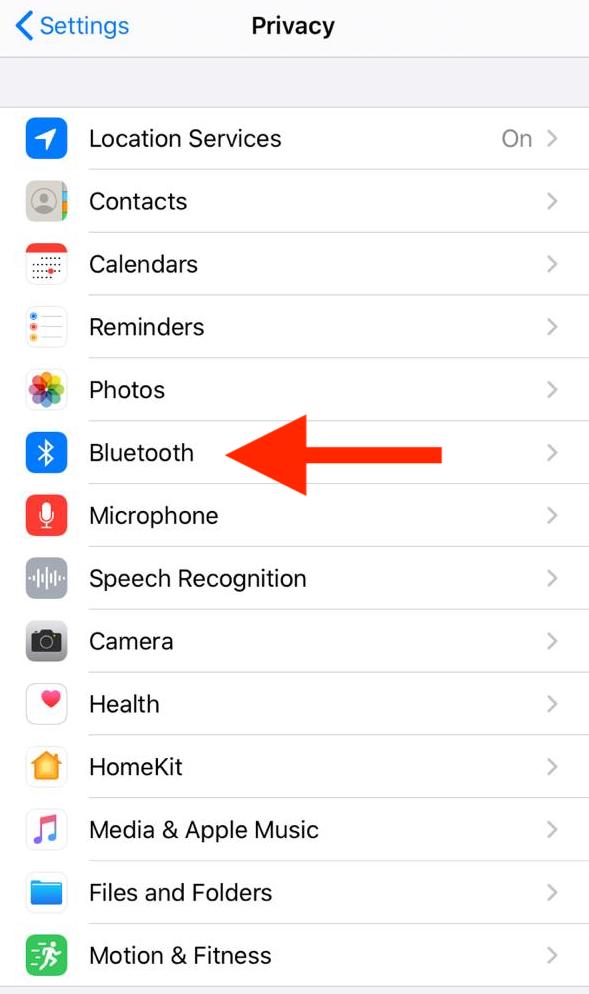
Go to Settings
Navigate to the Privacy section
Tap on the ‘Bluetooth’ option
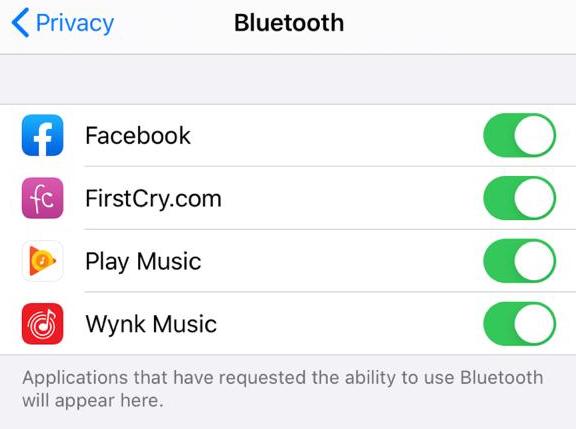
Next, a list of applications appears with a toggle next to each app. Here, you can flip the toggle on or off as you like to enable or disable specific apps’ access to Bluetooth services.
Whenever you open an application for which you have disabled Bluetooth access, a window will pop-up stating that the app wants to use Bluetooth.
If you think the application requires Bluetooth to work, you can grant permission to it right from that window. If you believe otherwise, you can choose to ignore the pop-up.
However, if you’re unsure about the application’s need for Bluetooth access, you can deny access for the first time and see if the app works regularly.
If it refuses to work correctly and breaks or crashes, you can go back and grant the app access to Bluetooth following the steps as mentioned earlier.
Just remember that disabling an application’s access to Bluetooth services does not restrict it from connecting and playing media on Bluetooth devices like speakers or headphones.
Every app can stream audio without asking for permission– it is the usage of Bluetooth for purposes other than streaming that Apple now provides better control over.
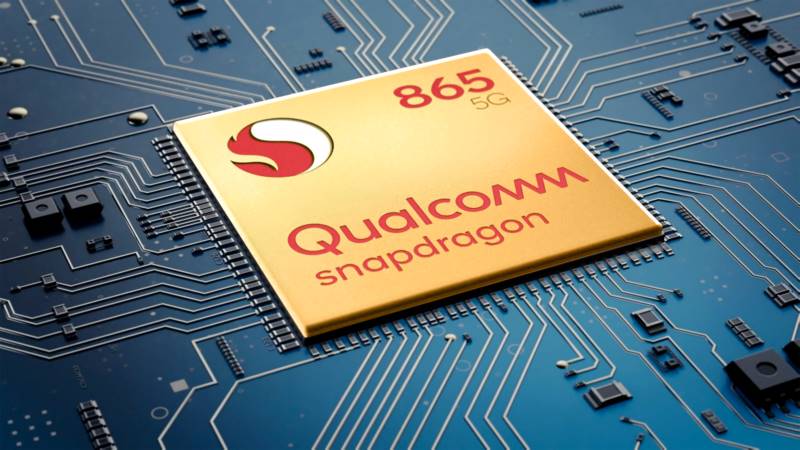
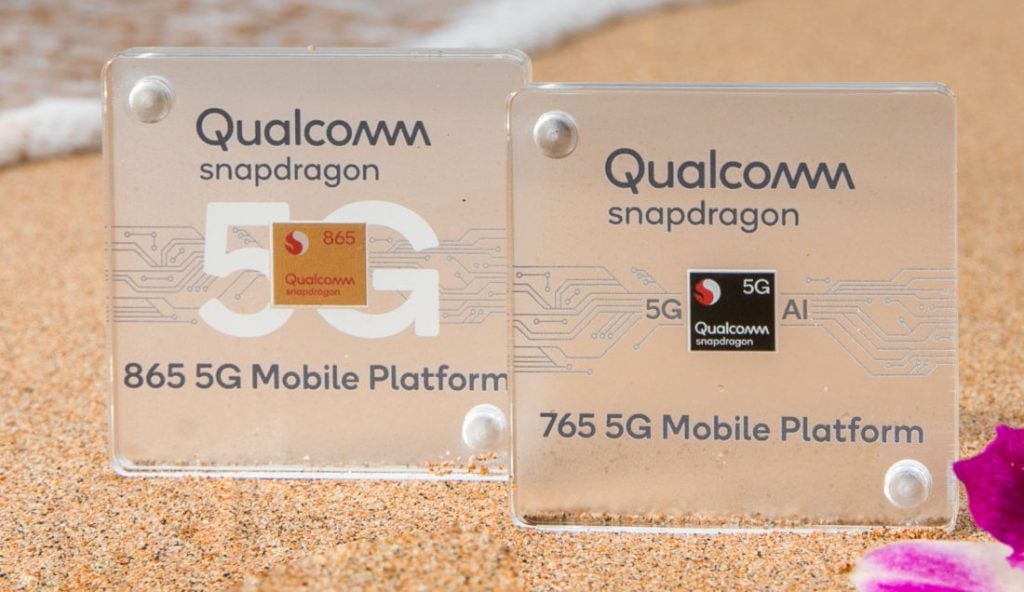
Every time Qualcomm comes up with a new chipset, it allows the tech media to benchmark it. This allows them to have a baseline. Using this, they would be able to compare them to devices releasing, later on, featuring this processor. Qualcomm’s current flagship processor, the Snapdragon 855, was released last December. The company released it as the first 7nm chipset for mobile devices. The successor chipset, the Snapdragon 865, is expected to be launched by the end of this year. News about the tests related to the Qualcomm Snapdragon 865 is already going around. A device code-named ‘Qualcomm Kona’ was seen. The device was seen using the Snapdragon 865 mobile platform.
Looking back, we remember that the Snapdragon 855 was codenamed ‘msmnile’. What is surprising to note here is the fact that the Qualcomm Kona device also runs on the msmnile processor. However, its benchmarking scores are quite better than Snapdragon 855 processor. The 855 processor got 3.5k in the single-core test and in the multi-core test, it received a scored of about 11k. Regardless of how good a chipset might be, it is bound to come with pros and cons. Let’s take a look at the advantages of this processor.
Qualcomm Snapdragon 865 Benchmark
Advantages of Qualcomm Snapdragon 865 Benchmark
The Snapdragon 865 is produced on TSMC’s 7nm N7P process. This is also the same process used to manufacture Apple’s A13 Bionic chipsets. The Snapdragon 865 uses 10-bit HDR and 90FPS gaming and new display. In the Google Play Store, users will receive regular GPU driver updates. According to Qualcomm, the CPU and GPU on the upcoming chipset are 25% faster. The processor is expected to be 25% higher with regards to power efficiency as well.
Qualcomm has retained the CPU architecture from the Snapdragon 855. We know that a 2.84GHz prime core running on the Kryo 585 along with three Cortex-A55 efficiency cores clocked at 1.8GHz and three Cortex-A77 mid-cores clocked at 2.4GHz. The primary core is designed to handle more heavy-duty tasks like 4K videos, heavy games, etc. while photo editing and a similar thing will be processed by the mid-cores. Most other tasks will be handled by the efficiency cores. Besides the GPU and CPU, the processor has a new ISP that comes with the ability to crunch 2 gigapixels per second and enable 8K video recording. It also has a new AI Engine that is faster and efficient than ever before. It is designed to finish tasks like in-call live translation.
With regards to its performance as well, the processor does not let you down. It performs 15 per cent faster on CPU benchmarks and around 9 per cent faster on GPU tests. As of now, it does not have the optimizations required to run phones like OnePlus 7T Pro. We will have a better knowledge of how it actually performs once the phone starts powering commercial devices. The Snapdragon 865 will be joined with the Snapdragon X55 5G modem so most Android phones getting release the upcoming year will have 5G support.
Qualcomm Snapdragon 855
Any Poor Qualities?
While benchmarks offer an important purpose, not many want to completely rely on it. While rating processors with numbers is a great way of filtering and sorting them, the problem arises when there are plenty of benchmarking tools, each one stressing a different aspect. Initially, everything revolved around single-core and multi-core CPUs. Later, GPUs became more important. The trouble here is that there are plenty of factors that are not tested by most benchmarking tools, such as multimedia, wake-word responsiveness, and more. For the most part, users like to have a solid idea about the chipset’s speed ranks. Another issue is that some benchmarking tools don’t use the latest models for AI.
Talking about the Snapdragon 865 in particular, we see that the Performance Mode will not make any core perform faster. It will just make sure that the task is finished efficiently. Since it is very rare to find two devices having the same Snapdragon 865 tuning, it is up to the developers to determine how they want to balance the performance with battery usage. Naturally, the more the Qualcomm’s processor strives towards maximizing performance, the more power it sucks up from the battery.
Features
The Snapdragon 865 is expected to the choice for many 2020 Android flagship phones. Samsung, Google, OnePlus, and many other manufacturers are already eyeing it. The fact that Qualcomm has decided to make 5G an integral part of the chipset is a great move since this makes it the first choice of device manufacturers. While we don’t know a great deal about how it will work with commercial devices, we will soon know a lot more from OEMs and from third-party apps. You can be sure that the chipset is powerful enough to handle AI-powered features and experiences.
Qualcomm Snapdragon 865
Of course, the Snapdragon 865 is faster than the 855 regardless of the benchmarks being CPU or GPU constrained. Qualcomm depended on unmodified ARM Cortex-A77 design for the performance cores instead of simply making changes in the last year’s cores. While Qualcomm still needs to up its game to be able to compete with Apple’s latest production, it has been steadily improving its design. If this keeps up, they should soon meet those standards. However, as of now, Qualcomm lags behind Apple’s 2017 A11 processor in certain aspects. But with the latest release, other aspects are much better now.
Verdict
Overall, the Snapdragon 865 performs far better than last year’s Snapdragon 855. While devices having less RAM and running on 865 processes might not perform up to the mark, they still perform better than 855-powered models. While Apple has always managed to stay one step ahead of the game, it looks like Qualcomm is doing great trying to bridge the gap. With 5G support and AI capability, Qualcomm could possibly find it easier to compete in the market. Another major benefit of 865 is its improved memory latency. It ensures that the loading times are low and the overall functioning of the device is smooth.
Xbox Series X is the next one set to launch towards the end of 2020. Known earlier as Xbox Project Scarlett, the product was recently released at The Game Awards 2019. Although users knew about the impending release of the next Xbox, the details about the same were not available. After the latest update, we now know a lot more about the upcoming Xbox Series X. Microsoft offers many next-generation hardware consoles where “Series X” is just one of them. While Xbox is planning on releasing this model, Sony is working to launch PS5. Let’s take a look at Xbox Series X and its features.
Xbox Series X Specs
The new Xbox features AMD’s custom-designed processor that uses Zen 2 and Navi architecture. When compared to the Xbox One X, we find that Xbox Series X is twice as powerful. It can run games efficiently at 120Hz frame rates and with8K resolutions. The console also has an SSD storage system, a physical disc drive, and ray-tracing technology. What makes it more alluring is that it is compatible with Xbox One accessories.
Xbox Project Scarlett Components
On first glance, it looks to be one of the finest consoles in the market. The company has focussed on the rate and playability of the games, according to Spencer. It helps in ensuring that the games load extremely fast and that the game is running at the highest frame rate possible. With regards to the numbers, the company is hoping to get the games running at 60 FPS in 4K. So far, Microsoft has worked to bring 4K visuals in Xbox so as to bring strong visual improvements with this product.
Xbox Series X Review
In Series X, an SSD will come as standard. It will allow the users to use its storage system as virtual RAM. In addition to this, the load time performance will be increased by as much as 40 times. When we talk about standard RAM, the console is set to use GDDR6 which is usually used as a memory for graphics cards. However, Series X could possibly use it as a fast RAM instead.
Benchmark results are now available which features AMD Flute SoC. If that is indeed the case, we know a lot more about the power level and specs about the same. While Microsoft has been playing these details close to the chest, we will get to know a little bit more, if the benchmark results are true. According to the news, the AMD Flute SoC will have eight Zen 2 cores, 16 threads, and SMT capability. However, the base clock speed is only 1.6GHz which is not very high.
Xbox Series X Controller
Microsoft is, of course, working on its next-generation controller that will go with its next-generation console. This next-gen Xbox Wireless Controller is designed to be more accessible. Microsoft has revamped the controller’s design, such as its shape and size. With the company determined to improve and enhance tech and design and every opportunity, this design revamp doesn’t really come as a surprise. Along with all these changes, we see that users will be getting a dedicated share button that allows them to share videos and images with others.
Xbox Series X Controller
Xbox Series X Games
Phil Spencer mentioned that it will be more immersive and realistic. He believes that this is the stepping stone into the future of gaming. Phil also said that the 15 Xbox Game Studios are working on creating a massive next-generation library including Hellblade II: Senua’s Saga.
Halo Infinite is now a confirmed launch title of Xbox Series X. Since it has been five long years since a mainline Halo game was released, fans are going to be quite excited. The Halo franchise is considered to be Xbox’s first popular games. The fact that Microsoft has chosen to launch its next-gen console with Halo makes it a pretty thoughtful move. It will come with three generations of backwards compatibility. This means that users would be able to run literally thousands of games and not be restricted to a few.
The company is also planning to take a cross-generation approach to avoid siloing. Phil said, “Our goal for our first-party games is that your entitlements will be cross-generation and your Achievements will move effectively with your save game because that’s where they stand.” Coming to third-party games, there are plenty of developers and games waiting to be made available on the new Xbox. Ubisoft’s Gods and Monsters, Watch Dogs: Legion, and Rainbow Six Quarantine and EA’s Battlefield 6 will all feature here.
Older Xbox Consoles
Xbox Game Studios mentioned that the release of Xbox Series X will not affect any of the previous models. The company is planning to have an approach that will include the family of devices instead of just the latest one. This is the only way one would be able to cater to all the customers and ensure that they are able to use it well and comfortably. Cloud game-streaming might be in the cards in the future as well.
Xbox Series X
Project Lockhart
Besides Xbox Series X console, rumours have it that Microsoft is also working on other next-generation Xbox, nicknamed Project Lockhart. It looks as if this new Xbox will belong to a family. According to a Microsoft spokesperson at the Game Awards, “Similar to what fans have seen with previous generations, the name ‘Xbox Series X’ allows room for additional consoles in the future.”
Other speculations suggest that this model could be a lower-priced next-gen Xbox console that would fall just below the higher-end Xbox Series X. Project Lockhart will likely be disc-less console and far more powerful than its current disc-less box.
Verdict
Xbox Series X is a next-gen console which most players are eager to get their hand on. It looks like the company is learning from the past and making decisions that will ensure that the users will have a better overall experience. All in all, you can sure this is going to be one awesome ride. With backward compatibility, users will now have more choices than ever.
Xiaomi recently patented a device with the World Intellectual Property Office or WIPO. Sometime back, the company patented their phone with an extendable display. This latest Xiaomi patent relates to an all-screen device with full-screen surround display and an under-display camera. The smartphone came out in a series of patents on WIPO in mid-December. Although Xiaomi has filed these patents about a year ago, WIPO only recently approved them.
The Latest Xiaomi Phone
The Xiaomi phone features a completely unique design. With an all-screen ‘surround display’, you will find that indeed most of the phone is a simple screen. Except for the top and bottom sides, the entire phone is just display. There are no bezels at all. It is not very clear how a model like is expected to function while having enough tech in place so that accidental touch is not a problem.
Xiaomi Patent for Phone
The front of the phone, the back, and the left and right sides are all display. Apparently, each display works separately with their own layout. The main speaker of the phone is located at the bottom. It is accompanied by a Type-C USB port. The microphone is present at the top side. Another surprising thing about the phone is that you will not find a single physical button on the phone. Since there is no SIM card slot either, it looks as if the phone is designed only to accept an eSIM.
No earpiece makes it here either. However, this does not come as a surprise since Xiaomi is known to make use of tech that does not really need a physical earpiece to work. Unlike the recently released Xiaomi Mi MIX Alpha, this upcoming phone will not have any camera either. At least, not the regular variety.
Under-Display Cameras
Coming to the next unique thing about the phone – the under-display cameras. So, it does look like this is where we are heading with designs in the future. The Xiaomi phone is expected to have one more under-display camera. Xiaomi, and even Oppo, have already shown us how the camera will look like and work. Gone is the period of demonstration. The device is all ready for launch in 2020.
Xiaomi Patent
That suggests that this phone is envisioned to include an under-display camera or more of them. Xiaomi already demoed its under-display camera tech, the same as OPPO. So, we could end up seeing the very first smartphones with such technology in 2020. The phone has undergone major design changes so as to be able to keep in with the latest tech.
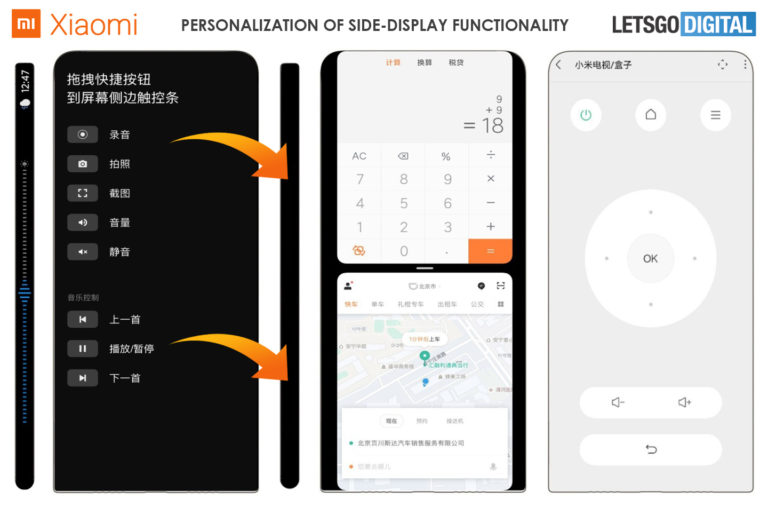
Users would not be able to check the network signal, battery life, or other things at the top of the screen. All these details have been shifted to the right side of the phone. The time, weather, and other details would now be available on the left side. It looks like Xiaomi is thinking outside the box. This could lead to some pretty interesting innovations. Hopefully, the phone makes it to the production stage.
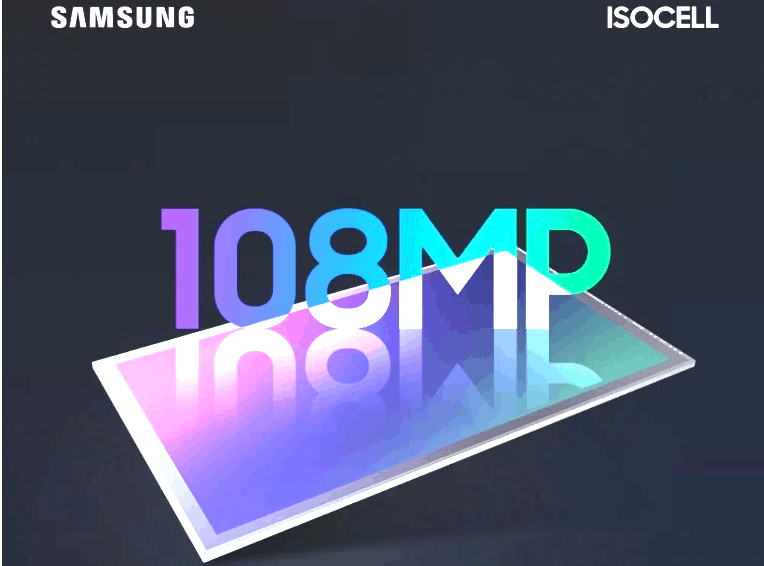
While the likes of Redmi and Realme are competing with 64MP camera phones and vying for market domination, Samsung has launched the world’s very first 108-megapixel smartphone camera sensor. This was developed in collaboration with Xiaomi. With this partnership, Xiaomi will become the first-ever company to release a smartphone featuring a whopping 108 megapixels camera. This camera sensor is the first one to go over 100 million pixels. You can expect a resolution comparable to that of a high-end DSLR camera.
Highlights Of The New Sensor
Let’s take a look at some of the highlight of this brilliant 108-megapixel camera sensor developed in partnership by Xiaomi and Samsung. It may come as a surprise, but this is not the first time these two companies have come together to work on camera sensors. Previously, Samsung and Xiaomi have collaborated to develop a smartphone that would use Samsung’s 64-megapixel ISOCELL GW1 sensor.
The name of this new 108-mega pixel sensor is ISOCELL Bright HMX sensor. The best part about them is that they are capable of shooting photographs even in extreme lighting conditions. Now that the development is done, Samsung will start mass-producing the ISOCELL Bright HMX sensors towards the end of August 2020. These sensors are 1/1.33-inch in size which makes it easier for them to allow more light. The large surface area doesn’t hurt either.
Samsung said that they used the new Tetracell technology which joins 4 pixels into one. This is what lets the sensors take better photos even in low light areas. Besides improving colour accuracy, it will also minimize noise. For brighter lighting conditions, this sensor will make use of the Smart-ISO mechanism. This allows us to take clearer images by adjusting the level of amplifier gains. Since this adjustment depends on ambient light, the photos will emerge to be more realistic, rich in colour, and vivid.
Xiaomi’s Plans
Now that the companies have successfully finished the development of this 108-MP camera sensor, Xiaomi will now release the world’s 1st smartphone featuring this new sensor. Xiaomi’s co-founder and president, Lin Bin, said, “As we continue our partnership, we anticipate bringing not only new mobile camera experiences but also a platform through which our users can create unique content.”
Samsung 108-megapixel camera
Currently, Xiaomi is playing in the 64-MP camera smartphone market, competing with Realme and Redmi. Its 64-MP camera smartphone is expected to be released towards the end of 2019. What comes as a surprise here is that even Samsung has plans for releasing a 64-MP camera smartphone. Xiaomi, Samsung, and Realme will all be using ISOCELL GW1 sensor. Samsung was the one who developed this sensor as well.
As of now, Xiaomi has not mentioned which one of its smartphones would be featuring the 108 megapixels camera. However, those following the market speculation that it could be the Mi Mix 4. The comment of a senior Xiaomi executive gave rise to this rumour. He mentioned that Mi Mix 4 is likely to better than Samsung’s ISOCELL Bright GW1.